Being able to complete all of the tasks required to deliver on time, be them big or small, is a challenge for all of us. However, it is often the ‘small’ things that trip us up. These small things are often the important tasks that only become urgent when they are neglected. When it comes to delivering on time, small things can sometimes produce big results.
The kinds of small things I am thinking of include collating paperwork, capturing information required for manuals, reviewing quality hold points, updating a plan and the like. None of these items will be showstopper the first day that you don’t do it. None of these items are small when you think about them but they are tasks that don’t scream out at you when the customer is shouting about their order. OTIF (On Time In Full) can fail from not carrying out these less dramatic tasks.
A great tool to help us not forget the small things on a daily basis is the Kamishibai board.
What is a Kamishibai board?
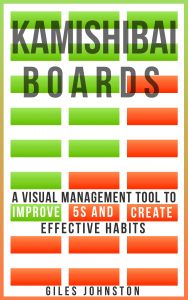
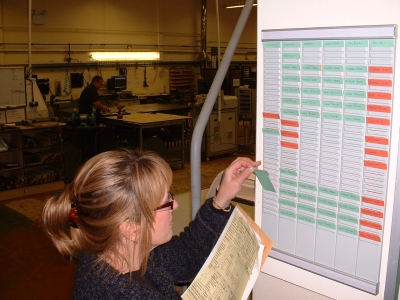
In the physical world, a Kamishibai board is T-card panel with double sided T-cards. The cards are red on one side and green on the other. Red means ‘not completed’ and green simply means ‘completed’.
You can build digital alternatives to a physical board. The medium is not critical, the location and usage is. The key is to keep the board in the eyeline of everyone working in the area.
Using one is easy. When a task is completed, you turn the card over, from red to green. If you organise the cards so that they are in a logical, time based, sequence you can manage the tasks by just glancing at the board. If the ‘green wave’ is in line with your routine, or project timeline, you can breath easy. If it isn’t, you can go and see the people assigned to the red cards that should have been turned over by now.
If you create a Kamishibai board that reflects a routine for a team, project or process, this board becomes very useful. It can help to build habits and ensure that the team are kept on track with their repeating routine.
OTIF delivery factors
If you’ve read my book The Reverse Fishbone you’ll know about identifying winning recipes for your business, including delivering on time. If you can define the causal activities that will help you achieve your goals (in this case, delivering on time) you can quickly create an effective list of tasks for your Kamishibai board.
With your list in hand, you can identify the frequency of each task (e.g. daily, weekly) and create your Kamishibai board.
Position it where it makes sense and then start turning the cards over as you complete the tasks during the routine’s cycle. At the end of the cycle, flip the cards back to red and repeat.
Keep repeating this process until your business processes change, or until your project is complete. Any items left on red need to be addressed in a timely manner and definitely before you reset all the cards back to a red state.
Using it
As I said earlier, the board’s location is key. If you have opted for a digital approach, keeping it on a screen where people can see it is vital for its success.
Next, ownership of the tasks (cards) has to be confirmed. People need to know what they are responsible for. You also need to know who to speak to when the card is overdue (still red).
You also want to consider when to escalate a card when it persists in a red state. Ideally think this through before you get into this situation.
Periodically you’ll want to consider a refresh of your board. Actions may change over time and some things that trip you up (that aren’t on the board) will want to be added.
Watch the numbers
Then, when your board is up and running, start watching your OTIF direction of travel. Is it trending up? Great, keep going.
If it isn’t, find the reasons. What are you missing, task wise, from your board? What issues are you facing and what own goals are you scoring through not completing the right tasks at the right time.
For every issue you identify, add a card to your board. And, if you need to retire other cards, remove obsolete cards from your Kamishibai board.
This isn’t rocket science and you can quickly create a visual management tool that can help you to improve your on time delivery performance.
Resources
If you’d like some help to build your own Kamishibai Board, to help improve your on time delivery ability, check out these books: